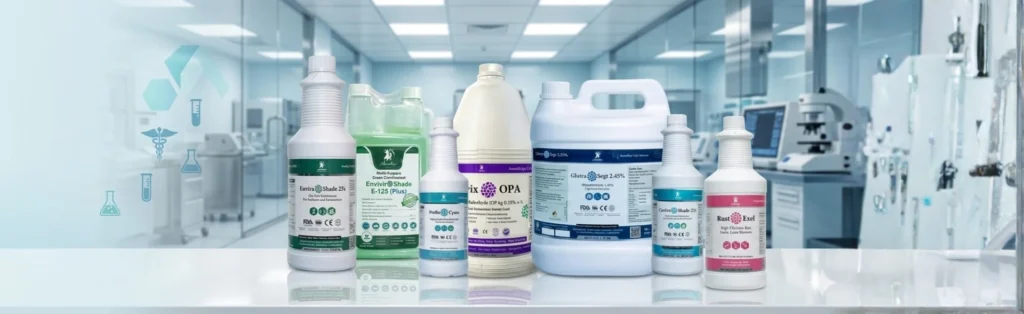
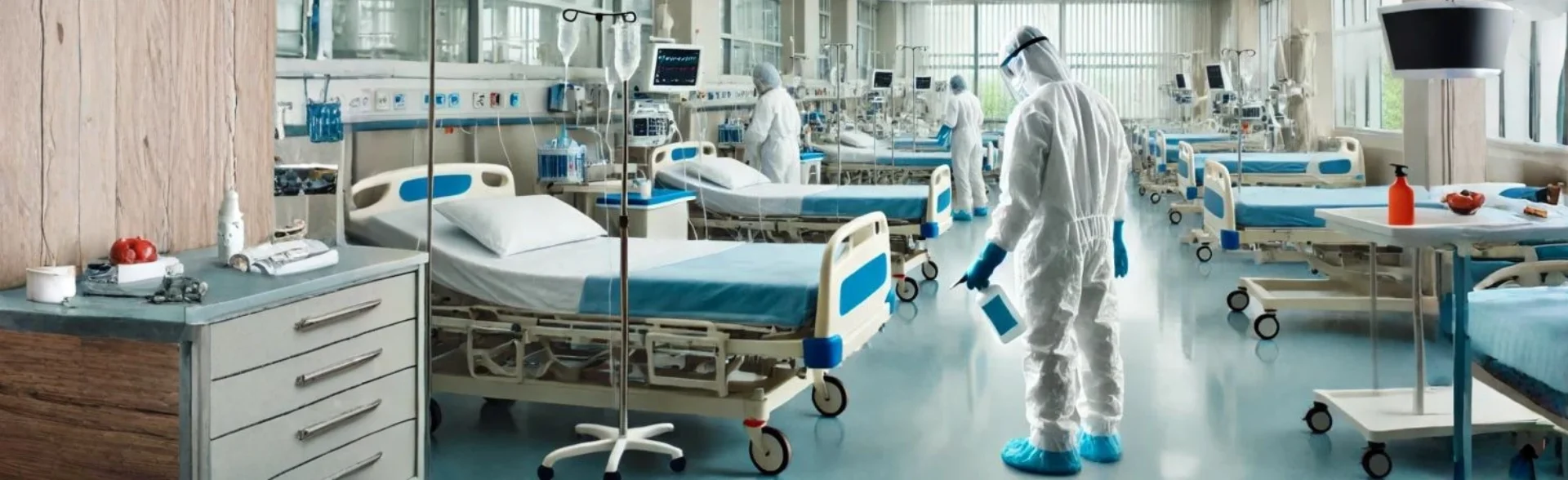
Choosing the right hospital grade disinfectants is essential for maintaining hygiene, preventing infections, and ensuring patient safety in healthcare environments. Hospitals, clinics, laboratories, and medical facilities require reliable disinfection solutions that can effectively eliminate harmful microorganisms from surfaces and medical equipment.
With increasing awareness around healthcare-associated infections (HAIs), healthcare facilities are now prioritizing advanced infection prevention strategies. Selecting suitable disinfectants not only improves hygiene standards but also helps healthcare organizations comply with safety regulations and quality protocols.
However, with so many healthcare disinfectant products available in the market, selecting the most effective solution can be challenging. Understanding the important factors involved can help healthcare facilities make better decisions.
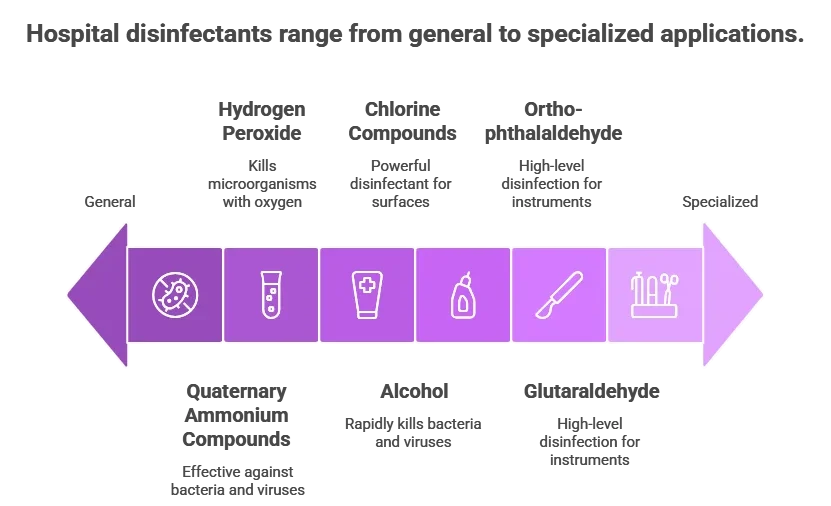
Table of Contents
- What Are Hospital Grade Disinfectants?
- Why Healthcare Facilities Need Hospital Grade Disinfectants
- Key Factors to Consider Before Choosing Hospital Grade Disinfectants
- Common Types of Hospital Grade Disinfectants
- Best Practices for Effective Disinfection
- Conclusion
What Are Hospital Grade Disinfectants?
Hospital grade disinfectants are specialized chemical solutions designed to destroy or deactivate harmful microorganisms such as bacteria, viruses, fungi, and pathogens commonly found in healthcare environments.
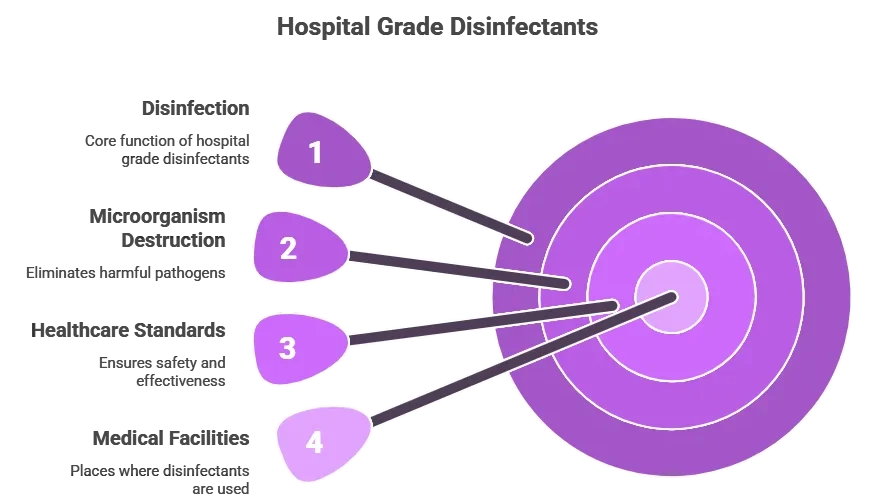
Unlike regular cleaning products, these disinfectants are specifically formulated for medical and healthcare applications. They are widely used in:
- Hospitals
- Operation theatres
- ICUs
- Laboratories
- Clinics
- Diagnostic centers
- Pharmaceutical facilities
Most hospital disinfectant solutions are developed according to international healthcare standards to ensure high levels of safety and effectiveness.
Why Healthcare Facilities Need Hospital Grade Disinfectants
Healthcare facilities are highly sensitive environments where infection control is critical. Poor hygiene management can lead to the spread of dangerous infections and compromise patient safety.
Using effective hospital grade disinfectants helps healthcare facilities:
- Reduce healthcare-associated infections (HAIs)
- Maintain sterile environments
- Protect patients and healthcare staff
- Improve operational hygiene standards
- Ensure compliance with healthcare regulations

High-touch surfaces such as hospital beds, operation tables, door handles, medical instruments, and patient care areas require continuous and proper disinfection to minimize contamination risks.
Modern healthcare facilities also require disinfectants that work quickly while remaining safe for surfaces and medical equipment.
Key Factors to Consider Before Choosing Hospital Grade Disinfectants
Selecting the right disinfectant requires careful evaluation of multiple factors. Not every product is suitable for every healthcare application.
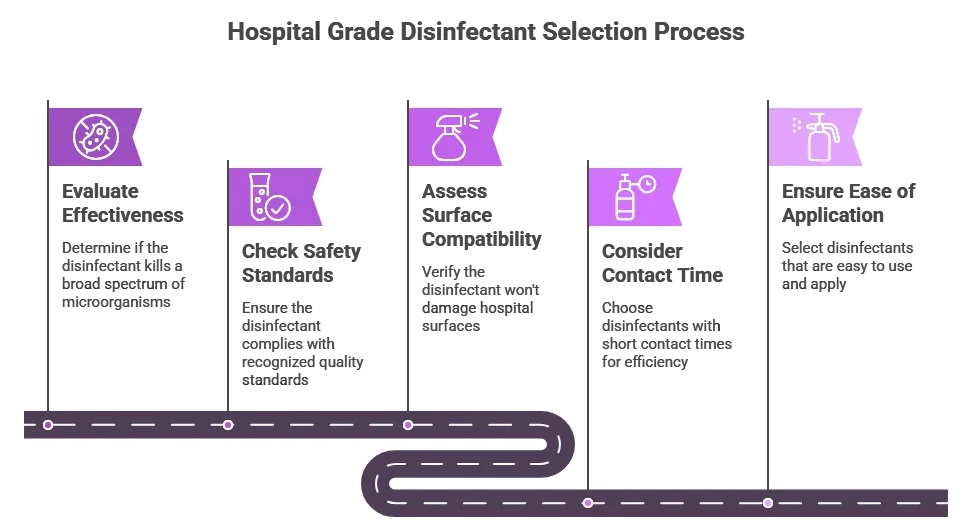
1. Effectiveness Against Microorganisms
The primary purpose of hospital grade disinfectants is to eliminate harmful microorganisms effectively.
Choose disinfectants that provide broad-spectrum protection against:
- Bacteria
- Viruses
- Fungi
- Resistant pathogens
Healthcare facilities should verify whether the disinfectant has been clinically tested and approved according to healthcare safety standards.
2. Safety Standards and Certifications
Reliable healthcare disinfectant products should comply with recognized quality standards such as:
- ISO Certifications
- GMP Standards
- WHO Guidelines
- FDA Approvals
Certified products ensure better reliability, safety, and consistency in healthcare environments.
3. Surface Compatibility
Different healthcare surfaces require different types of disinfectants.
Some disinfectants may damage:
- Medical devices
- Stainless steel surfaces
- Electronic equipment
- Sensitive instruments
Choose products that are compatible with hospital surfaces and medical equipment to avoid long-term damage.
4. Contact Time
Contact time refers to the duration required for a disinfectant to effectively kill microorganisms.
Fast-acting hospital grade disinfectants are preferred in healthcare facilities because they:
- Improve operational efficiency
- Reduce downtime
- Enhance cleaning productivity
Shorter contact times are especially beneficial in high-traffic healthcare areas.
5. Ease of Application
Healthcare facilities often require large-scale and frequent disinfection.
Choose products that are easy to:
- Dilute
- Spray
- Wipe
- Fog
User-friendly disinfectants improve staff efficiency and ensure proper application across healthcare environments.
Common Types
Different healthcare applications require different disinfection solutions. Below are some commonly used disinfectants in healthcare facilities.
Quaternary Ammonium Compounds (Quats)
These are widely used for surface disinfection in hospitals and clinics. They are effective against a broad range of microorganisms and are commonly used for floors, walls, and patient care surfaces.
Alcohol-Based Disinfectants
Alcohol-based disinfectants are commonly used for rapid disinfection of small surfaces and medical equipment. They provide quick microbial action and evaporate rapidly.
Hydrogen Peroxide Disinfectants
Hydrogen peroxide-based solutions are highly effective and environmentally friendly. They are often used in advanced infection prevention systems.
Chlorine-Based Disinfectants
These disinfectants are widely used in healthcare facilities for strong microbial control and outbreak management.
Best Practices for Effective Disinfection
Even the best hospital grade disinfectants may not work effectively if used incorrectly.
Healthcare facilities should follow these best practices:
Train Cleaning Staff Properly
Proper staff training ensures correct dilution, application, and safety handling procedures.
Follow Manufacturer Instructions
Always use disinfectants according to the manufacturer’s recommended dilution ratio and contact time.
Focus on High-Touch Areas
Frequently disinfect high-contact surfaces such as:
- Bed rails
- Switches
- Door handles
- Medical equipment
Use Proper Protective Equipment
Cleaning staff should use appropriate protective gear while handling concentrated disinfectants.
Maintain Regular Disinfection Schedules
Routine cleaning and disinfection schedules are essential for maintaining healthcare hygiene standards.
Conclusion
Choosing the right hospital grade disinfectants is one of the most important steps in maintaining safe and hygienic healthcare environments. Effective disinfectants help reduce infection risks, improve patient safety, and support healthcare compliance standards.
Healthcare facilities should carefully evaluate disinfectant effectiveness, certifications, safety, and ease of application before selecting a product. Reliable healthcare hygiene solutions play a major role in preventing contamination and ensuring better infection control.
As infection prevention continues to become a global priority, high-quality hospital disinfectant solutions are becoming essential for modern healthcare infrastructure.
For bulk inquiries and healthcare disinfection solutions, contact us today.